
The Power of Play: Building Language Skills Through Everyday Fun with an SLP Assistant
Playing is a child’s natural way of learning. Through this, they are able to recreate the reality they see in a safe manner. For them, it is a comfortable and fun way to express how they interpret their world. Additionally, in play, children are able to experiment with language without the pressure and fear of making a mistake. A good Speech and Language Pathology, or SLP assistant understands that this free atmosphere promotes better speech development, unlike rigid exercises.
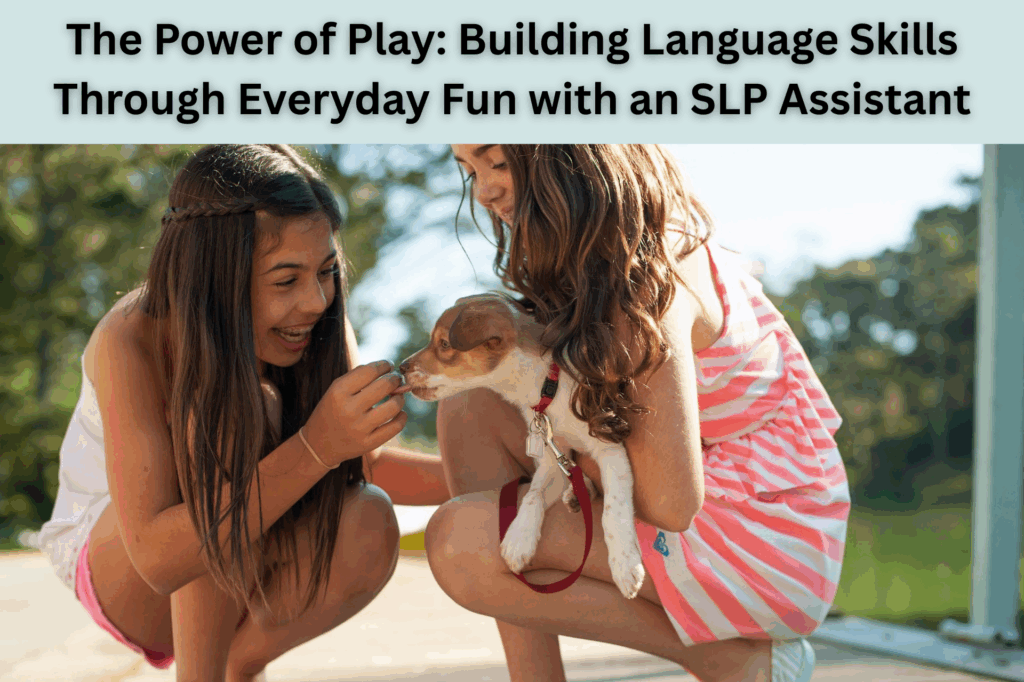
Here at Speech Link, we view play as not simply entertainment but a good tool to achieve goals faster and in a less stressful manner. Every SLP assistant knows that play is an effective learning resource that builds actual communication opportunities. This is because when children play, they listen, respond, and express ideas better and in their natural way. Therefore, these are the moments that provide good foundations for speech and language development.
How Play and a Professional SLP Assistant Support Language Growth
Play presents new words in meaningful contexts. While playing, your professional SLP assistant guides children to listen to words in relation to actions, objects, and feelings. This therefore makes them remember and learn words easier. Moreover, repetition is also promoted by playing. This enhances language learning in the long run. In the same vein, social play helps in key communication skills. Hence, children are taught how to share and take turns. In doing so, they are able to ask questions and make appropriate responses. Another habit that they engage in while playing is the reading of facial expressions and body language. These are the skills they need that will make conversations successful.
Everyday Play Makes a Difference
Although special toys and tools are cool, language-building play can still happen without them. Home activities with less complexity like cleaning up or putting away dishes, for example, can provide effective learning experiences. During these activities, speech can be promoted by talking during pretend play, describing day-to-day activities, or even by playing simple games. Examples of language-rich activities include play (or real and guided) housekeeping, shopping, or cooking. Additionally, constructing using blocks and explaining what is done as well as board games that involve taking turns are helpful. Moreover, singing songs using actions and repetitions also promotes communication without a sense of therapy.
The Role of Parents, Caregivers, and an SLP Assistant
During playtime, adults play a significant role. Parents, caregivers, and even an SLP assistant can be a facilitator to guide the child during certain activities. Discussion of what the child is doing assists in developing language. Furthermore, asking open-ended questions helps to bring longer responses. Adults can repeat and elaborate on the words of the child as a soft way of imitating the right language. It is important to always remember that playing must be enjoyable and not compulsory. This helps to keep the child interested and motivated by following the interests of the child. Just like adults, children would be more open to communicating when they love what they are doing.
How Speech Therapy and a SLP Assistant Uses Play
Play-based strategies are frequently utilized in speech therapy and SL pathologists. Professional therapists make activities based on the goals and interests of the child. They use play to help focus on sounds and words as well as on social skills in a natural manner. As such, children are made to feel relaxed, self-assured, and more ready to participate. Here at Speech Link, we have observed play to bring significant improvement. Therefore, it facilitates learning as well as building confidence and connection. In conclusion, we know that play brings happiness, bonding, and education. Therefore, incorporating it into therapy sessions makes children in need of developing language skills feel supported.