
SLP Assistant Shares How Daycare Experiences Shape Early Communication
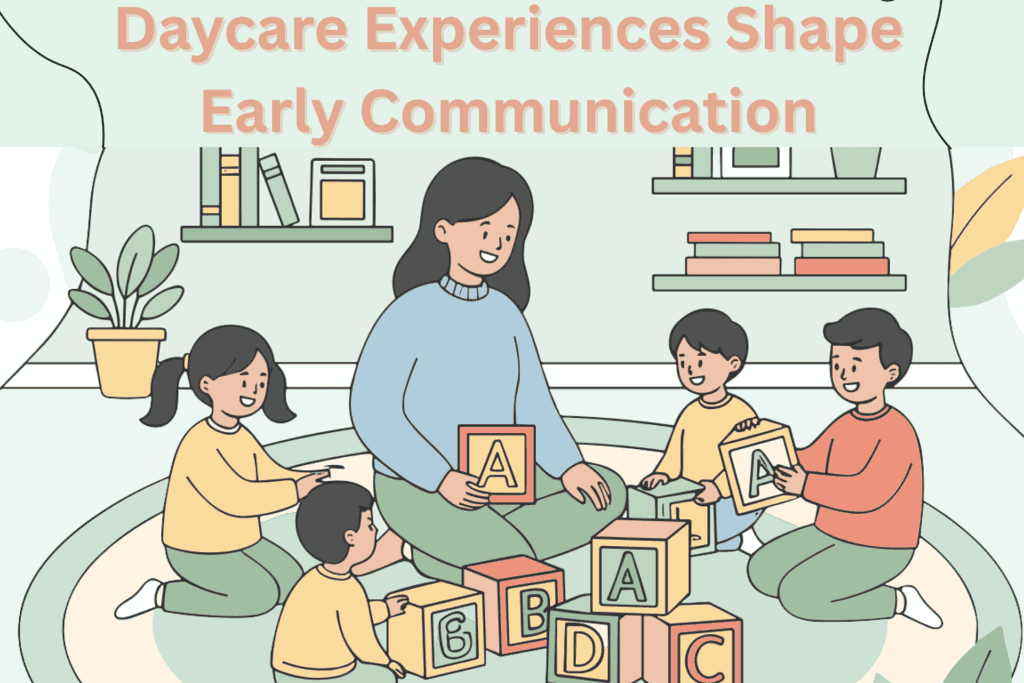
Early childhood is a very important stage in a child’s development. As sensitive as they are at this stage, it can also be a lot of “hit and miss” as well as “trial and error” for parents as to what works best with respect to the child’s uniqueness. For speech and language development, one of the earliest places where children can exercise the use of their speech and language skills is daycare. This is because during organized activities and play, children listen to conversations, directions, and narratives. The exposure assists them in relating words to actions and feelings. In this environment, language is made practical and meaningful. Over time, children become comfortable with using words in situations that they know well. That is why for an SLP assistant, choosing the right daycare and considering the environment in which the child stays on most days is exceptionally important.
It is because the experiences they have in daycare at a young age will help shape their future speech and communication skills.
How Peer Interaction Builds Communication Skills, according to an SLP Assistant
Playing with peers they encounter in daycare makes children talk meaningfully. This is because kids require language in order to participate in games, request assistance, as well as to exchange ideas. An SLP assistant emphasized that these interactions prompt them to improve on new words and construction of sentences. Additionally, it helps them create more structure to their thoughts so they can express themselves better. Moreover, children also learn through observation. They imitate speech patterns, modify tone, and enhance clarity instinctively. Unsurprisingly, this growth is consistent in daycare.
Social Communication Develops Through Daily Routines
Daycare routine facilitates Social language development. An SLP assistant explains that during circle time and group play activities, for example, there are activities that teach listening and taking turns in talking. Hence, children know to alternate as to when to talk and when to remain silent. Because of this, they start to read social cues along with facial expressions. These skills help them develop relationships and prepare them to meet classroom expectations when they transition to the “big school.”
SLP Assistant Emphasize Observing for Communication Challenges
Early communication problems are mostly observed when a child is in daycare. In some cases, children may exhibit difficulties in following instructions or communicating needs. In other cases, the child might break up the group activities or get frustrated. It is important that these signs, although not always something extraordinary, are not to be overlooked. This is because detecting this at the start of the child’s life leads to early intervention. Thereby enabling the child to correct these minor issues and prevent them from becoming major concerns.
How Speech Link and Our Team of SLP Assistants Supports Growing Communicators
Here at Speech Link, we collaborate with families and educators to guide and assist children develop their communication skills as early as possible. Our experienced and expert speech-language pathologists can provide personalized treatment of articulation, language comprehension, and social communication to each child under their care. Our team also believes in working with parents and early childhood education teachers to provide the right inter-environmental skills, such as those in the daycare environments, are best for children’s development.
Each SLP assistant here at Speech Link understands how early intervention makes children develop confidence, lessen frustration, and express themselves effectively at home and in learning environments. Therefore, daycare plays an important role in early communication development. Children will be able to develop socially and linguistically with the necessary support.