
Reducing Anxiety Around Speaking in Groups
A lot of people, young and old, are anxious when they speak in public. Although this is normal for everyone, kids’ anxiety from having to do this is usually far greater. Speaking in public hits differently compared to when two can talk, face to face. As a result, if the stress keeps them from participating, they may be kept out of conversations in a social group or affect activities in school.
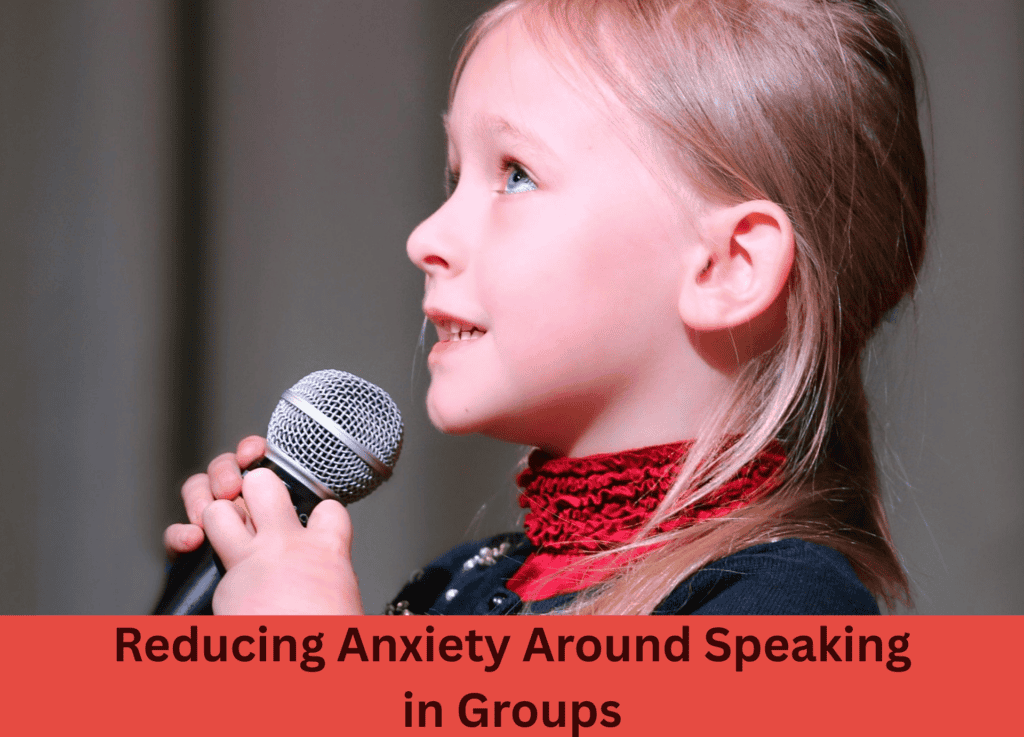
Unfortunately, having speech or language challenges may increase these worries. As you can imagine, a child’s fear of making mistakes when talking is magnified when this potential error may happen in a public setting. Furthermore, they might also be concerned about misinterpretation, which is usually not the case when two can talk with a peer or family member. Over time, if it persists, this can impact confidence and participation.
Recognizing the Signs
Because every child is unique, children show speaking anxiety in different ways. While some don’t answer questions in class, others speak too quietly or don’t speak at all unless they are in a small group where two can talk closely. Because of this, despite having wonderful ideas, they may fail to express or hesitate to share their opinions. In other cases, a child may also show physical signs such as fidgeting or avoiding eye contact.
As parents or educators, all the above behaviors should be recognized and understood. Remember, these kids are not lazy or defiant but are actually anxious. This is because, oftentimes, children are generally eager to join in, but the feeling of being unable to do so hinders them. As such, a positive difference is made when there is gentle encouragement and gentle transition from a two can talk setting into a public situation.
Building Confidence Step by Step
In order to build kids’ confidence, celebrating small wins is important. Children do not have to immediately speak in large groups before they are ready to do so. For example, speaking with close family members or a small friend group where two can talk comfortably is a good start. With this, they can then practice with one friend and move on to a few friends later.
Moreover, positive feedback encourages continued progress. Celebrating small successes encourages motivation. Over time, as confidence increases, larger speaking situations become less stressful. As guardians, patience remains an important part of the process.
Practicing Communication Every Day
Daily conversation with these kids also gives good practice opportunities. Families, for example, can encourage children to use their imagination when they share stories over dinner. In some cases, asking open-ended questions also contributes to longer discussions. Other times, role-playing different situations can be helpful. In these cases, children can practice self-introductions, answer simple questions, or take turns in the conversation as two can talk. Not only do these activities enhance communication while easing stress, having regular practice helps speaking feel more natural.
How Speech Therapy Can Help
Speech therapy aids in communication and confidence. In our session, we help children acquire methods to communicate ideas effectively. In the same vein, they are also taught to speak in encouraging contexts and take turns in sharing ideas as two can talk. Furthermore, activities are tailored to accommodate the needs and comfort of each child. We understand that the more the kids learn, their fear of speaking also lessens. Additionally, therapy can also assist children in coping with communication difficulties that can lead to anxiety.
How Speech Link Supports Confident Communication
Here at Speech Link, we know that every child has their own way of building confidence. Our role as Speech and Language Pathologists is to develop individual therapy plans that focus on communication skills to reduce speaking anxiety. In addition to this, we also partner with families to encourage progress beyond therapy sessions. For example, real-life practical home strategies reinforce new skills. With guidance from Speech Link, children can develop the confidence to speak, participate, and connect with others in group settings.