
SLP Assistant Dissects Mixed Receptive-Expressive Language Disorder
and How to Support Kids with this Condition
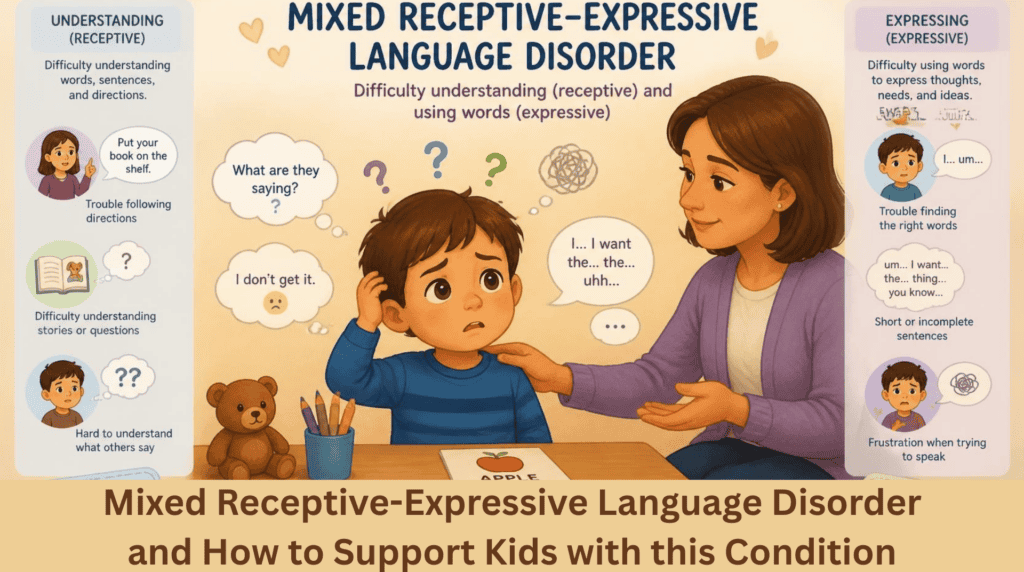
Among the many neurological conditions affecting speech, mixed receptive-expressive language disorder is the type that impacts both understanding language and its verbal expression. In this case, an SLP assistant explains that children may have difficulty understanding conversations as well as communicating ideas. As such, these challenges make learning and everyday communication difficult. However, just like autism, every child experiences the disorder differently. While some kids can only follow simple directions, others may know what to say but have trouble putting their thoughts into words.
Signs Families May Notice
Oftentimes, signs indicating issues are encountered during normal activities. For example, a child might not fully understand simple instructions and may need them several times. In some cases, they may also give short or incomplete answers. An SLP assistant explains that because of this, conversations can sometimes become frustrating for both children and parents. There are also some children who are not ready to talk to others and thus rely on gestures instead of words. On the other hand, others get angry or frustrated when they don’t have a good chance of talking. As parents and caregivers, it is important to recognize these patterns early so that support can be started sooner.
Helping Communication at Home
The role of the parents in language development is important; this is stressed by Speech Language Pathologists and SLP assistants. It is because clear speech provides children with access to new information. Although language learning can be integrated into daily activities, it is important to note that breaking instructions into smaller steps is essential so as to improve comprehension. Additionally, reading together builds both listening and vocabulary skills. Whereas simple but open-ended questions promote meaningful conversations. Moreover, giving children extra time to respond reduces pressure.
SLP Assistant Explains Benefits of Early Intervention
Early intervention is one of the best approaches in promoting better communication skills. This is because kids learn skills during important growth stages. Hence, as therapists, SLP assistants help kids get better in comprehending language. Additionally, it also helps children feel more confident sharing their thoughts. It is important to note, however, that progress is built up over time with consistent support. Additionally, little steps make a big impact in terms of independence as children may feel more at ease when participating at home and at school. Lastly, early guidance also supports future academic success.
How Speech Therapy Makes a Difference
Speech therapy addresses both receptive and expressive language skills. Knowing this, sessions are about understanding directions and effective language use. An SLP assistant also explains that activities are adapted to each child’s abilities and goals. SLPs also create engaging learning experiences through play and conversation where kids have opportunities to practice communication in supportive settings. Moreover, families are also given practical tips to help them support learning at home. This is because working together creates stronger long-term outcomes.
How Speech Link Supports Families
Here at Speech Link, we understand that every child’s communication journey is unique. So, our speech-language pathologists complete thorough assessments before creating personalized therapy plans. Furthermore, we emphasize developing skills that are applicable in everyday life. In line with this, close collaboration with families is also a key aspect of the therapy process. Parents receive guidance from our experienced SLPs that supports communication beyond the clinic. With compassionate care and evidence-based therapy, Speech Link helps children strengthen language skills, build confidence, and communicate more successfully in everyday life.