
The Emotional Side of Speech Therapy that SLP Assistants Want Families to Know
Speech therapy is more than just about helping build a child’s communication skills. It also impacts the emotional health of a child. SLP assistants explain that kids may become frustrated when they are unable to communicate effectively. Thus, affecting self-confidence and social interaction. In these cases, children react to communication difficulties in unique ways. While some become quiet in unfamiliar situations, others, on the other hand, may show frustration through their behavior. Families are able to support their child’s therapy journey by knowing how these feelings are expressed.
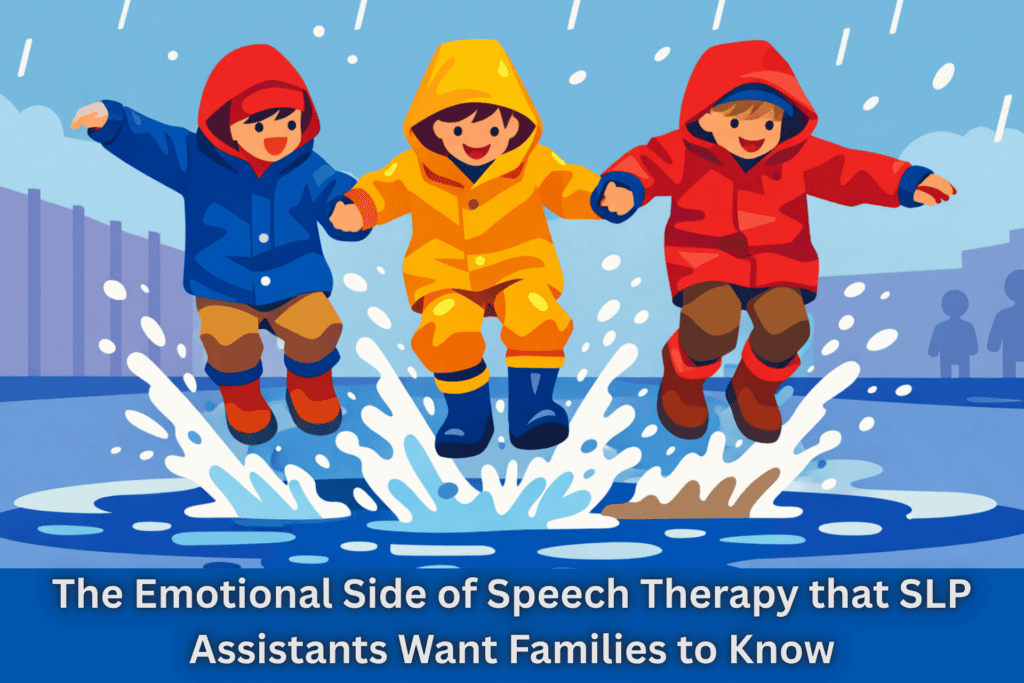
SLP Assistants Stress the Importance of Understanding Your Child’s Feelings
Expressing emotions is difficult, even for some adults. SLP assistants emphasize that for children, this becomes more challenging. So, they may express their emotions through everyday actions. Challenging tasks, for example, can lead a child to shut out any discussion about it. In some cases, they may also lose confidence after being misunderstood. Because of this, families should keep in mind that despite therapy sessions, it may take time for things to improve. Additionally, comparing children with others can put pressure on them. Instead, provide a safe space of patience and encouragement to foster growth. This is because children are more likely to communicate if they feel supported.
Building Confidence Along the Way
Part of their speech therapy is praising their successes, no matter how small. This is because Speech and Language Pathologists and SLP assistants know that confidence develops through consistent success. As such, this is also encouraged to be practiced at home. This is because each new word or conversation represents meaningful progress. Moreover, children are also motivated to try again when they have had positive experiences. Instead of criticism, errors should be treated as opportunities for learning. SLP assistants highlight that supportive responses make children feel accepted and understood. Over time and as they go along, confidence builds along with their communication skills.
The Family’s Role in Emotional Support
Parents and caregivers are important in their child’s speech therapy journey. SLP assistants explain this is because meaningful opportunities for connection are created through simple conversations and daily household activities. For example, when children say something, parents can listen to them closely to communicate that what they say is important. In addition to that, families can also celebrate effort instead of perfection in order to build resilience and motivation.
How Speech Therapy Supports Emotional Growth
Speech therapy provides more than structured practice, explained SLP assistants. This is because children develop strategies to enhance their communication and expression. Moreover, as kids become more proficient at speaking, they also become more confident around other people. Thus, therapists need to provide encouraging learning environments where children are not afraid to experiment with words. With this, there is less anxiety and better communication skills.
How Speech Link Supports Families
Here at Speech Link, we understand that communication and emotions are closely connected. Each of our speech-language pathologists and SLP assistants offer individual care to assist with speech growth and emotional confidence. We collaborate closely with families during all stages of therapy and provide parents with practical strategies to encourage communication at home. Speech Link empowers children to have confidence, improve communication, and develop positive relationships through caring guidance and evidence-informed care.